
Applied AI for Accounting and Finance
About Course
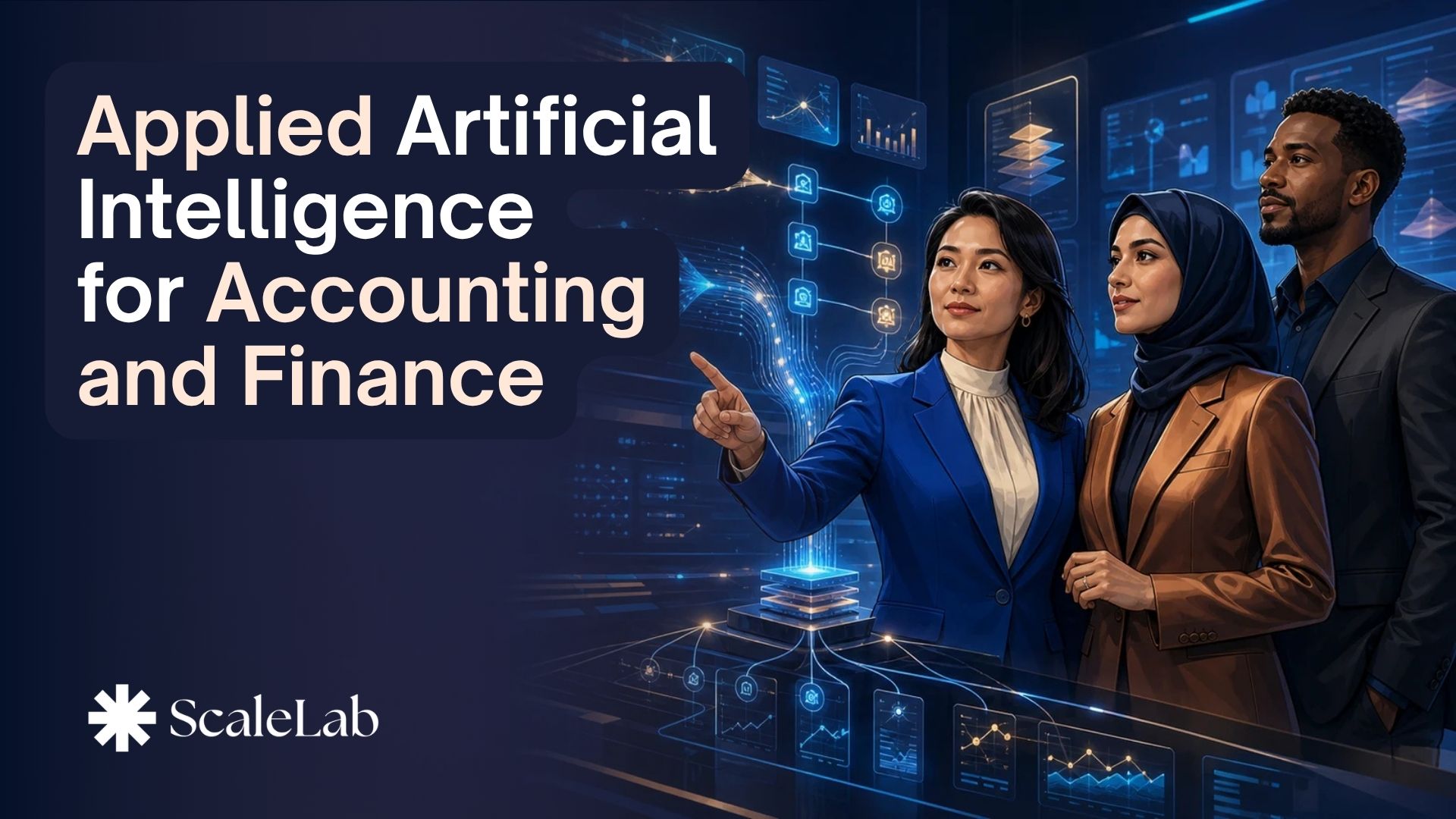
Finance teams spend hours classifying transactions, checking documents, explaining variances and rebuilding reports—yet using AI carelessly can expose confidential data or produce confident but incorrect answers. This course shows accountants, finance professionals and business leaders how to use AI for real work while keeping people, controls and reliable source data in charge.
You will learn to prompt AI effectively, protect financial information, support bookkeeping and reconciliations, analyse statements, prepare management commentary, improve budgets and forecasts, and strengthen controls and audit work. Practical activities demonstrate document extraction, classification, exception handling, scenario planning and workflow automation. Every application includes verification, approval and audit-trail requirements.
By the end, you will become an AI-enabled finance professional—able to select valuable use cases, build responsible workflows and improve speed without sacrificing accuracy or accountability. Successful learners receive a Scalelab Academy certificate, lifetime access and future updates, plus prompt libraries, policies, workflow templates, checklists and course-specific AI tools.
Course Content
Section 1: Understand AI’s Role in Accounting and Finance
-
AI in Plain Language
-
Assistance, Automation and Agents
-
What AI Does Well
-
Apply It: Select a Use Case
-
Finance Use Cases
-
Where AI Fails
Section 2: Prompt AI for Reliable Financial Work
Section 3: Apply AI to Bookkeeping and Transaction Workflows
Section 4: Analyse Financial Statements and Performance with AI
Section 5: Use AI for Budgeting, Forecasting and Scenarios
Section 6: Strengthen Controls, Audit and Risk Management with AI
Section 7: Build an AI-Powered Finance Function
Section 8: Use Financial Data Safely and Responsibly
Earn a certificate
Add this certificate to your resume to demonstrate your skills & increase your chances of getting noticed.

Student Ratings & Reviews